
+
WeChat:13918185781


ESOS Helpline 400-657-5166



You Are Here:Home > Information Dynamics
> Industry dynamics
News navigation
What is the function of a balanced forklift
source:wikieno.com | Release time:2026-01-21
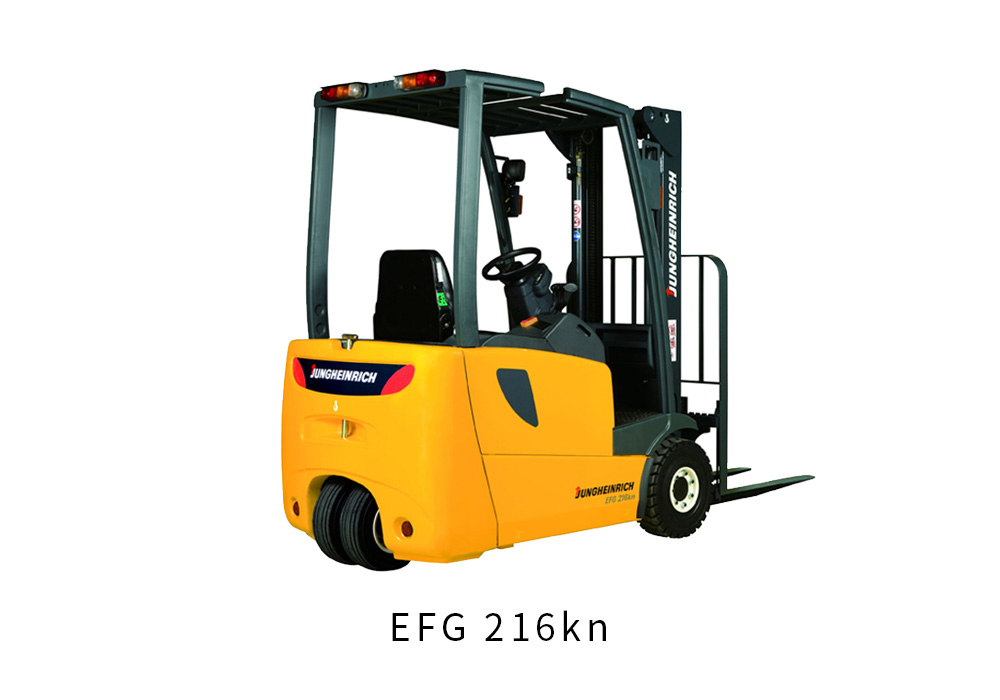
The balanced weight forklift is a core equipment in the field of industrial handling, which focuses on efficiently and safely completing the loading, unloading, stacking, and short distance transportation of goods. It can be divided into the following aspects:
1. Loading, unloading, and transportation of goods
This is its most fundamental function. Through the front-end fork, palletized goods can be directly picked up and unloaded, enabling fast loading and unloading of goods in warehouses, workshops, docks, logistics centers, and other scenarios, as well as short distance handling between different work areas, replacing manual handling, greatly improving loading and unloading efficiency, and reducing labor costs.
2. High level stacking and pickup
With its adjustable gantry structure, the balanced weight forklift can lift goods to shelves several meters high, complete high-level stacking operations, effectively utilize the vertical space of the warehouse, and improve storage utilization; At the same time, it can also retrieve goods from high-level shelves to meet the storage and retrieval needs of three-dimensional warehousing and adapt to the intensive storage mode of modern warehouses.
3. Adapt to various working conditions
Different types of balance weight forklifts (such as internal combustion and electric) can be adapted to different operating environments. Internal combustion forklifts have strong power and are suitable for outdoor, heavy-duty, and long-term work scenarios, such as container cargo handling in ports and freight yards; Electric forklifts have low noise and are suitable for indoor environments with high environmental requirements, such as food warehouses and electronic workshops for cargo turnover.
4. Ensure the stability of heavy-duty operations
The counterweight equipped at the rear can counteract the overturning moment generated by the front fork when carrying goods, ensuring the stability of the forklift during full load lifting, turning, or ramp driving, avoiding forklift overturning due to the weight of goods, and ensuring the safety of operators and goods.
1. Loading, unloading, and transportation of goods
This is its most fundamental function. Through the front-end fork, palletized goods can be directly picked up and unloaded, enabling fast loading and unloading of goods in warehouses, workshops, docks, logistics centers, and other scenarios, as well as short distance handling between different work areas, replacing manual handling, greatly improving loading and unloading efficiency, and reducing labor costs.
2. High level stacking and pickup
With its adjustable gantry structure, the balanced weight forklift can lift goods to shelves several meters high, complete high-level stacking operations, effectively utilize the vertical space of the warehouse, and improve storage utilization; At the same time, it can also retrieve goods from high-level shelves to meet the storage and retrieval needs of three-dimensional warehousing and adapt to the intensive storage mode of modern warehouses.
3. Adapt to various working conditions
Different types of balance weight forklifts (such as internal combustion and electric) can be adapted to different operating environments. Internal combustion forklifts have strong power and are suitable for outdoor, heavy-duty, and long-term work scenarios, such as container cargo handling in ports and freight yards; Electric forklifts have low noise and are suitable for indoor environments with high environmental requirements, such as food warehouses and electronic workshops for cargo turnover.
4. Ensure the stability of heavy-duty operations
The counterweight equipped at the rear can counteract the overturning moment generated by the front fork when carrying goods, ensuring the stability of the forklift during full load lifting, turning, or ramp driving, avoiding forklift overturning due to the weight of goods, and ensuring the safety of operators and goods.
【Related articles】
【Related Products】
-
Product Center
Shelves Used ShelvesForklift Trucks Storage Services Transport Service Plastic Products -
News display
Company Dynamics Industry Dynamics -
About us
Company Profile Development History Organizational Structure
Shanghai Xuansu Industry Co., Ltd.
Address: No. 888 Dongda Road, Pudong New Area, Shanghai
Shanghai Xiaofeng Supply Chain Management Co., Ltd.
Address: 22nd Floor, Building B, Greenland Jiezuo, Kunshan City (100 meters south of Greenland Avenue)
Zhongke New Plastic (Zhejiang) Technology Co., Ltd
Address: Room D2, 3rd Floor, Building 4, No. 590 Changhe Road, Changhe Street, Binjiang District, Hangzhou City, Zhejiang Province
Jiangsu Baojuying Plastic Industry Technology Co., Ltd.
Address: No. 1188 Xinzhou Road, Wujiang District, Suzhou City
Shanghai Xiangfurui Supply Chain Management Co., Ltd.
Address: 62, Building E, No. 8100 Daye Road, Fengxian District, Shanghai
Contact phone number: 13918185781
-

Follow WeChat
Copyright © 2024 Shanghai Xuansu Industry Co., Ltd. 
Shanghai Xiaofeng Supply Chain Management Co., Ltd. Zhongke New Plastic (Zhejiang) Technology Co., Ltd. Jiangsu Baojuying Plastic Industry Technology Co., Ltd. Shanghai Xiangfurui Supply Chain Management Co., Ltd.
Technical Support:Lange
 home
home
 WeChat
 telephone